
The heated practice · 3 min read
The benefits of infrared heat: what the warmth brings to your practice.
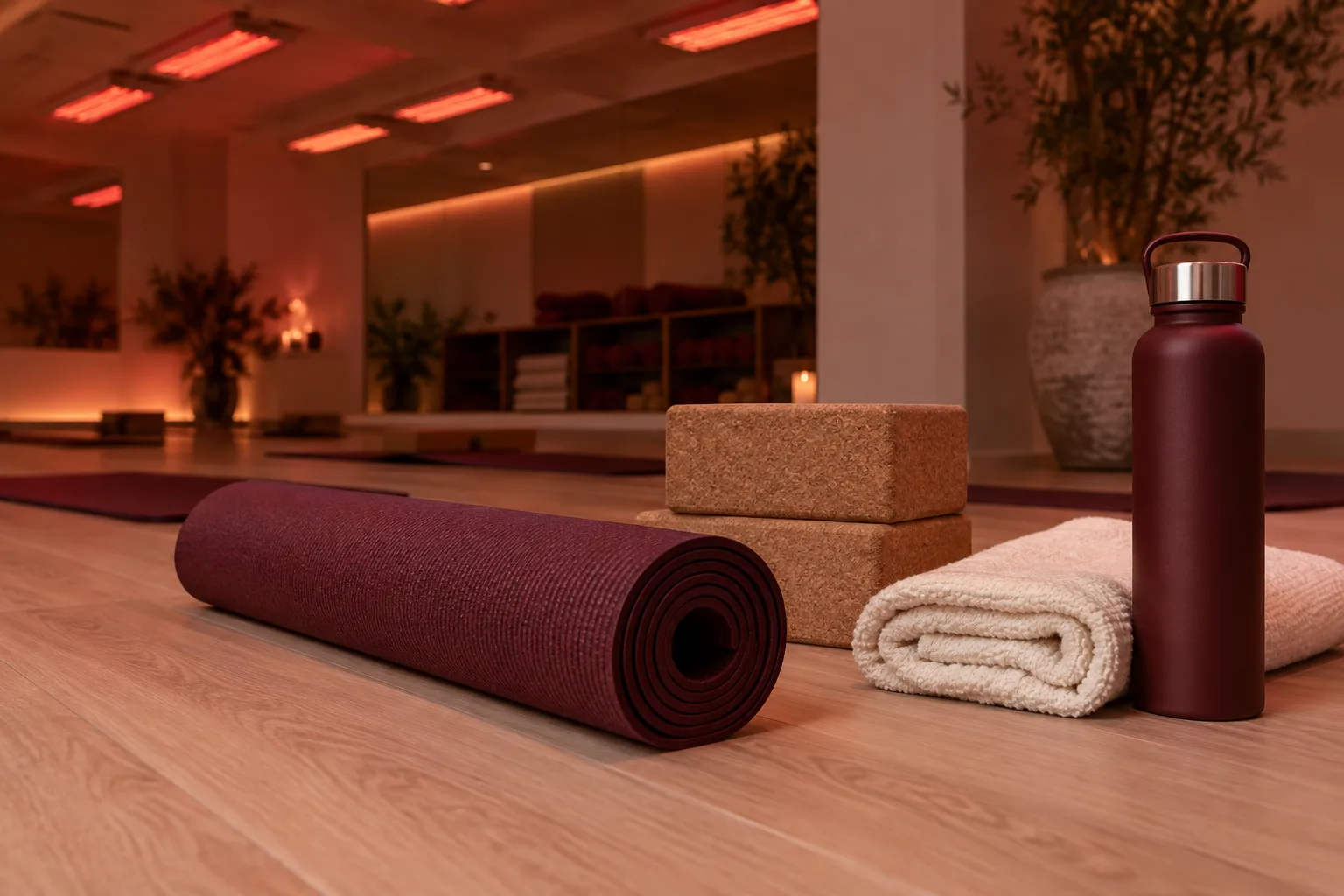
If you have looked at Sora’s class schedule, you have probably noticed the word infrared. It is how we heat our studio—and one of the things that makes stepping into the room feel different. Understanding that warmth can help you decide whether a heated practice is right for you.
What is infrared heat?
Infrared is a form of radiant energy that transfers heat. Infrared heaters can warm people and surfaces directly, rather than relying only on heating the surrounding air. Infrared is different from ultraviolet light; it is not the UV exposure associated with sunlight.
At Sora, it creates the warm setting for mat Pilates and yoga. The temperature varies by class and may reach 40°C. Infrared does not make a hot room risk-free, so comfort and pacing still matter.
Warmth you can feel
For people who enjoy heated movement, the most immediate benefit is the experience itself: a warm room, an opportunity to settle in, and a practice that feels different from an unheated class. Some people find that warmth makes movement feel more comfortable. That is personal, and more heat is not automatically better.
Let your instructor’s warm-up prepare you for the work. Even if you feel more flexible in a warm room, keep your range controlled and avoid forcing a stretch.
Where the evidence has limits
Research on infrared saunas has explored possible health effects, but sauna sessions and an active studio class are different experiences. Mayo Clinic notes that larger, more precise studies are needed to establish proposed infrared-sauna benefits. Those findings do not establish extra health benefits from infrared-heated Pilates or yoga.
The movement is still central. Choose a class for the practice you want to build, rather than promises of detoxification, accelerated fat loss, or treatment of a health condition. Sweating is your body’s way of cooling itself; the amount you sweat is not a score for your workout.
Make the heat work for you
Bring water, arrive hydrated, and give yourself permission to pause. If you feel dizzy, nauseated, weak, or unwell, stop exercising, tell your instructor, and move to a cooler area. If you are pregnant or have a condition or medication that affects heat tolerance, ask your healthcare provider whether heated exercise is appropriate before booking.
The best heated practice is one you can approach with awareness. Start gently, notice how you respond, and find the class that feels right for your body.
Find your place on the mat.
Explore infrared-heated Pilates and yoga at Sora in Streetsville.
Find your class